
INTRODUCTION
Choosing a dairy cow is not simply a question of finding the animal that produces the most milk.
The better question is:
Which breed can produce milk profitably under your farm’s actual conditions?
That distinction matters in Kenya because dairy farms operate across very different climates, land sizes, feeding systems and levels of management. Therefore dairy breeds should be selected according to production systems and climatic zones.
So, is there one best dairy breed for farming in Kenya?
Not really.
The better answer depends on your land, feed, water, climate, management capacity and market.
- Friesian is attractive for farmers targeting high milk volume and who can support high production with good management.
- Ayrshire offers a useful balance of productivity and adaptability.
- Jersey can be attractive where land and feed are limited and milk components are commercially important.
- Crossbreeding can combine desirable characteristics from specialised and locally adapted cattle.
- The highest-yielding cow is not necessarily the most profitable cow.
- Breed selection should happen after assessing the entire farm system.
1. IS THERE REALLY A “BEST” DAIRY BREED FOR KENYA?
Kenya’s main dairy breeds include Friesian, Ayrshire, Guernsey and Jersey, alongside Sahiwal and various crossbreds. Research on Kenyan smallholder farms has found that breed preferences change depending on ecological and socioeconomic conditions. No single genotype is superior across all traits and production environments. That is an important lesson for an investor.
The “best” cow is the one that fits the business.
2. WHAT SHOULD YOU CONSIDER BEFORE CHOOSING A BREED?
Start with five questions:
✅ Where is the farm located?
Temperature and climate influence animal performance. Heat stress can reduce milk production.
✅ How much feed can you reliably provide?
A genetically high-producing cow still needs sufficient energy, protein, minerals and water to express that potential.
✅ How much land do you have?
Limited land may favour production systems that rely heavily on purchased or intensively produced fodder.
✅ What is your management capacity?
Higher-output animals can require more careful feeding, reproduction, housing and health management.
✅ How will you sell the milk?
A farm selling mainly on volume may make different genetic choices from a business focused on milk quality or value-added products.
3. FRIESIAN: STRONG CHOICE FOR MILK VOLUME
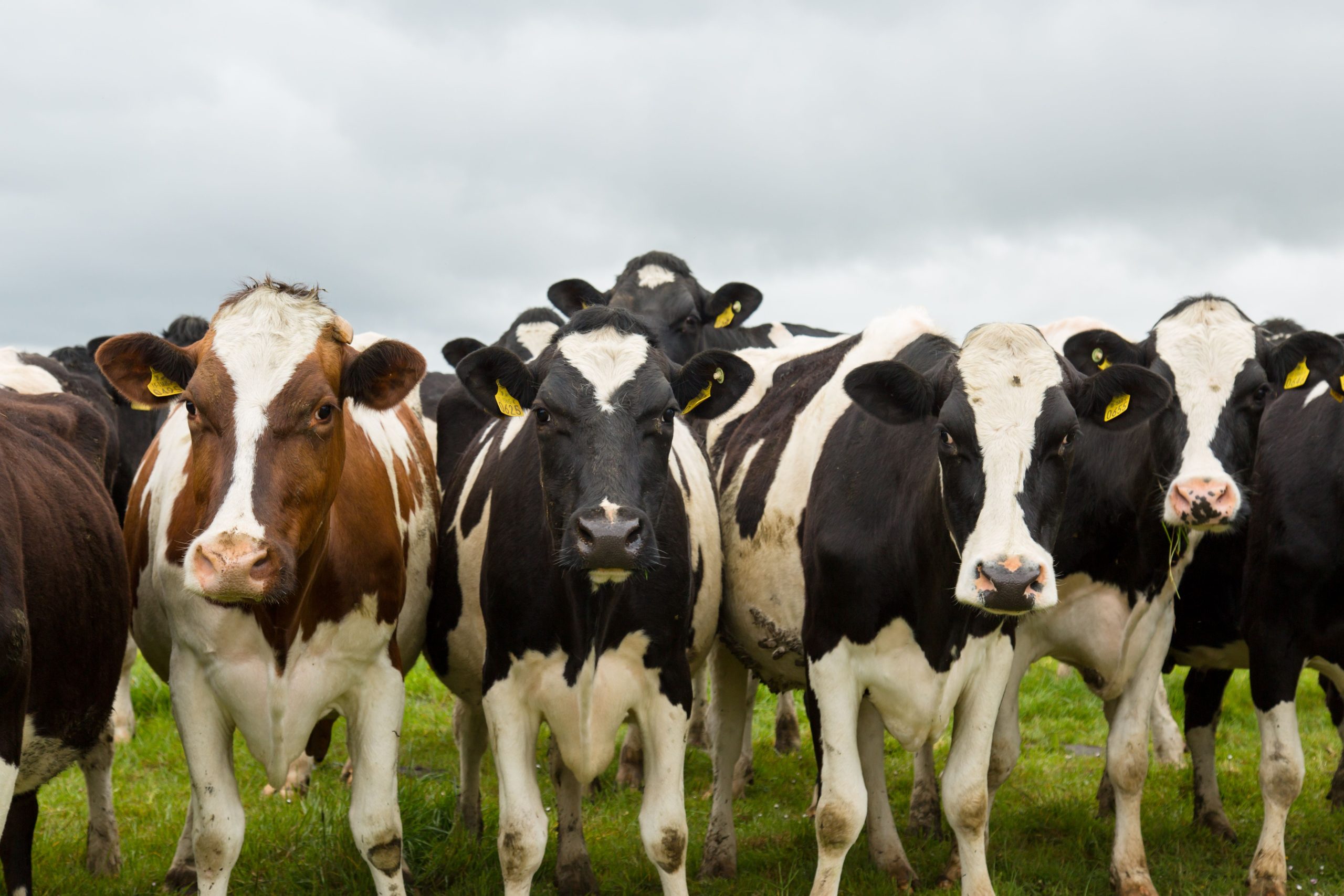
Friesian, or Holstein Friesian, is the dominant breed in Kenyan milk-recording data and has traditionally been favoured for commercial milk production. It is attractive for farmers targeting high milk volume and who can support high production with good management.
Its main attraction is production potential.
For a well-managed commercial farm with reliable feed, water, housing and market access, Friesian can be an attractive option.
But there is a catch.
High production potential comes with high management expectations. If feed quality is poor or heat stress is significant, the economic advantage can shrink.
Best suited to: well-managed commercial systems with strong feed and infrastructure support.
4. AYRSHIRE: A MORE BALANCED OPTION.
Ayrshire is described as fairly hardy, with good feed conversion efficiency and adaptability across varied agro-ecological zones. It is used under zero-grazing, semi-zero and free-range systems.
For some farmers, this balance between production and adaptability may be more valuable than pursuing maximum milk volume.
Best suited to: farmers looking for commercial production with somewhat broader system flexibility.
5. JERSEY: SMALL COW, DIFFERENT ECONOMICS.
Jersey deserves consideration, particularly where land and feed resources are constrained.
Jersey is suitable for smallholder producers. It has relatively low feed requirements, feed-conversion efficiency and milk with high fat and protein content.
That can matter when the business values milk components or when the farm has limited resources.
Best suited to: smaller farms and production models where feed efficiency and milk composition are important.
6. CROSSBRED COWS.
Crossbreeding may offer an alternative to choosing between productivity and adaptation.
However, crossbreeding should be planned carefully. Randomly mixing genetics does not automatically produce a better cow.
Best suited to: farmers seeking a deliberate balance between production, adaptation and resilience.
7. SO WHICH DAIRY BREED IS BEST?
A practical way to think about the decision is:
| Farm situation | Breed strategy worth considering |
| High-input commercial farm | Friesian or carefully selected high-grade crosses |
| Medium-scale farm | Friesian, Ayrshire or suitable crosses |
| Smaller landholding | Jersey or suitable crossbred animals |
| Warmer or more challenging environment | Appropriate crossbreds and locally adapted genetics |
| Strong milk-volume market | Friesian and suitable high-production crosses |
| Limited feed resources | More efficient, appropriately adapted genetics |
| Long-term genetic improvement | Planned crossbreeding or structured breeding programme |
These are decision guidelines, not universal recommendations. Actual selection should consider the farm’s specific climate, feed resources, management and market.
The Most Important Lesson for Investors.
Do not buy a cow before you understand the farm.
A good dairy investment starts with:
Land → Water → Fodder → Housing → Genetics → Management → Market
Not the other way around.
Productivity, production costs, fodder, feeds and genetics are among the issues that matter for sustainable dairy development.
In other words, buying an expensive cow is not the same as making a good investment.
The goal is to build a productive and economically sustainable dairy system.
8. CONCLUSION.
There is no single dairy breed that is automatically the best for every Kenyan farm.
Friesian can be compelling where the priority is milk volume and the farm can support high production. Ayrshire can provide a useful balance of production and adaptability. Jersey can make sense where feed efficiency, smaller size and milk composition matter. Crossbreeding can provide another route where adaptation and productivity need to be balanced.
The right decision starts with the farm environment and business model, not the breed’s reputation. Before you buy the cows, make sure the farm can support the business.
Planning a commercial dairy enterprise? The breed is only one part of the investment decision.
📞 Reach out for Agricultural Land Lease or Purchase Opportunities +254-725-50 50 50, +254-768-29 23 18
FREQUENTLY ASKED QUESTIONS.
1. Which is the best dairy breed for farming in Kenya?
There is no universal winner. Friesian is attractive for high milk volume, Ayrshire for a balance of production and adaptability, Jersey for smaller-scale and feed-efficient systems, while suitable crossbreds can provide a useful balance between production and adaptation.
2. Is Friesian better than Ayrshire in Kenya?
Not necessarily. Friesian generally has strong milk-production potential, but Ayrshire can be attractive where adaptability and management flexibility are important. The better choice depends on the farm environment and production system.
3. Is Jersey suitable for small dairy farms?
It can be. Jersey is suitable for smallholder dairy producers and has relatively low feed requirements and high-quality milk characteristics.
4. Are crossbred dairy cows good for Kenya?
They can be, particularly when breeding is deliberately designed to combine useful traits.
5. Should I choose a breed based on milk yield alone?
No. Consider milk yield alongside feed costs, water, climate, fertility, health, land, management requirements and the price or market for your milk. A high-producing cow can be a poor investment if the farm cannot support its requirements.