
If you are thinking about starting a poultry business in Kenya, one question probably comes up early:
Should you keep layers, rear broilers, or invest in improved Kienyeji?
There is no simple answer.
The most profitable poultry enterprise depends on what you want from the business. Are you looking for quick cash turnover? Regular income? A scalable commercial operation? Or a poultry enterprise that gives you flexibility to sell both eggs and birds?
Feed costs, market access, mortality, management and selling prices can make a bigger difference to your final returns than the type of chicken you choose.
1. LAYERS, BROILERS AND IMPROVED KIENYEJI: WHAT’S THE DIFFERENCE?
The three enterprises operate differently.
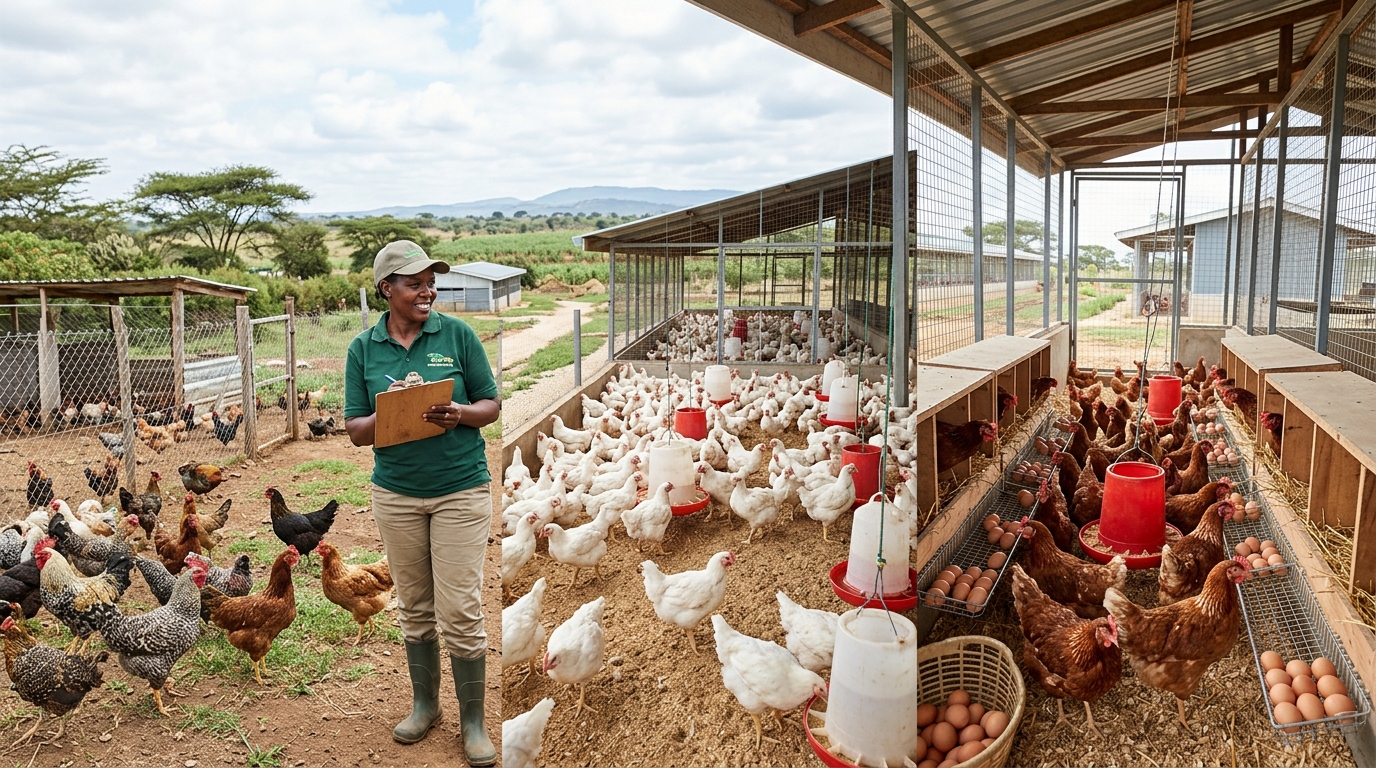
Layers are primarily kept for egg production. The business requires patience and substantial working capital before the flock reaches productive age, but successful layers can provide relatively regular egg income.
Broilers are meat birds bred for rapid growth. Their biggest attraction is the shorter production cycle, which allows farmers to sell birds and reinvest in another batch sooner.
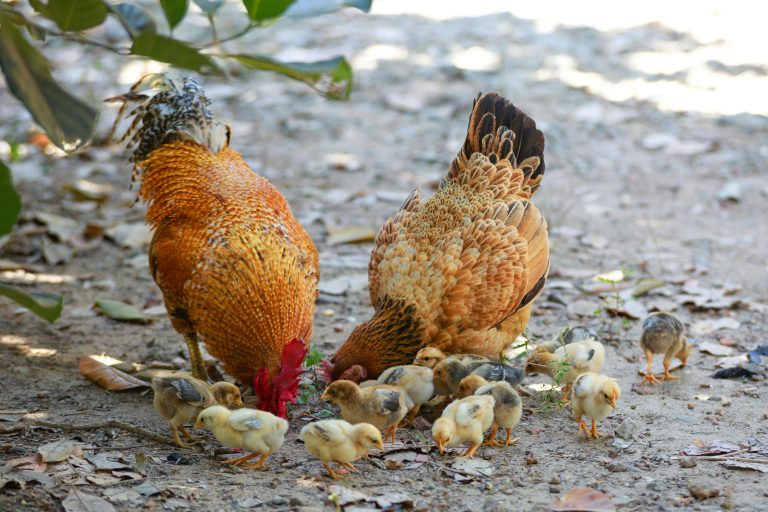
Improved Kienyeji sits somewhere between the two. Improved indigenous breeds can provide both meat and eggs, while offering characteristics that appeal to consumers who prefer indigenous-style chicken. Improved indigenous chickens can mature earlier and lay more eggs than traditional indigenous birds.
2. LAYERS: BUILDING A RECURRING INCOME STREAM
The biggest advantage of layers is the potential for regular income from egg sales once the flock is in production.
This can make layers attractive to investors who want a business with recurring cash flow rather than waiting for the entire flock to reach market weight.
There is, however, a catch.
You have to finance the birds through their growing period before significant egg income begins. Feed remains a major cost throughout the enterprise.
Recent Kenyan market data also shows that egg prices vary considerably between locations. Records from different markets have shown wholesale prices ranging from around KSh 350 to KSh 600 per tray, with retail prices sometimes higher.
So the question is not simply whether layers produce eggs. It is whether you can produce and sell those eggs profitably.
3. BROILERS: FAST TURNOVER, TIGHT COST CONTROL
Broilers appeal to farmers who want a shorter production cycle.
Instead of maintaining birds for an extended laying period, the farmer grows birds to market weight and sells them.
This creates an opportunity to recover working capital faster and begin another cycle.
But broilers are also highly sensitive to feed costs, growth performance, mortality and selling price.
Wholesale prices range from around KSh 250 to KSh 280 per kilogram live weight. If your production cost is too high or buyers offer weak prices, a fast production cycle does not automatically translate into good profit.
4. IMPROVED KIENYEJI: A FLEXIBLE COMMERCIAL OPTION
Improved Kienyeji has become an increasingly interesting option for Kenyan farmers.
Kenya’s indigenous chicken population increased by 11.3%, from 48.8 million birds in 2022 to 54.3 million in 2023. The growth is linked partly to commercialization and consumer preference for indigenous-based chicken products.
Improved indigenous chicken is an enterprise with commercial opportunities, although feed costs remain a major constraint.
The flexibility is attractive. Depending on the production system and market, farmers can generate income from birds, eggs and other value-chain opportunities.
The challenge is that improved Kienyeji is not a low-cost enterprise simply because the birds are considered hardy. Good housing, feeding, vaccination, biosecurity and market planning still matter.
5. SO, WHICH IS MORE PROFITABLE?
The better question is:
Which enterprise fits your capital, market and management capacity?
| If your priority is… | Consider |
| Faster capital turnover | Broilers |
| Recurring egg income | Layers |
| Meat and egg flexibility | Improved Kienyeji |
| Large-scale commercial production | Layers or broilers |
| A diversified poultry enterprise | Improved Kienyeji |
| A business with established meat buyers | Broilers |
| A business with reliable egg buyers | Layers |
Feed deserves particular attention regardless of the choice. Feeding costs have a significant negative relationship with poultry financial performance.
Commercial quotations also show how different feed prices can be between categories. For example, one Kenyan supplier recently listed 70 kg layers mash at KSh 3,900, Kienyeji mash at KSh 2,950 and broiler starter at KSh 5,460. These are supplier-specific prices, not national averages, but they illustrate why feed budgeting matters.
6. WHAT CAN CHANGE THE PROFITABILITY EQUATION?
The profitability ranking can change quickly when the operating environment changes.
A farmer with excellent broiler buyers may outperform a layer farmer. Another farmer with a strong egg distribution network may find layers more attractive. The same applies to improved Kienyeji.
Water availability, housing, ventilation, biosecurity, road access, labour and proximity to markets can all influence results. Feed costs, extension access and distance to markets and roads are among factors affecting poultry efficiency.
For farmers in semi-arid areas such as Kajiado, these considerations become even more important. Reliable water, heat management, ventilation, feed storage and market access should be assessed before choosing the enterprise.
7. WHICH ONE SHOULD YOU CHOOSE?
Choose broilers if your priority is faster turnover and you already have a dependable market.
Choose layers if you have enough working capital and want recurring income from egg sales.
Choose improved Kienyeji if you want flexibility and are targeting consumers who value indigenous-style chicken and eggs.
For serious investors, however, the best starting point may not be choosing the breed.
It may be choosing the right market, location, water supply, infrastructure and production system first.
That is where poultry profitability is often won or lost.
8. CONCLUSION
Broilers offer faster capital turnover, but margins can be sensitive to feed and selling prices.
Layers can provide recurring income but require greater patience and working capital.
Improved Kienyeji offers flexibility through both meat and egg production.
Feed cost is one of the biggest profitability drivers across poultry enterprises.
Market access can be just as important as production performance.
Good housing, water, biosecurity and management are essential regardless of the enterprise.
There is no universal “most profitable” chicken. The right choice depends on your capital, market and business objectives.
Choosing between layers, broilers and improved Kienyeji is only one part of building a successful poultry enterprise. The location, land, water, infrastructure, production plan and market strategy matter just as much.
FREQUENTLY ASKED QUESTIONS
1. Which is more profitable, layers or broilers in Kenya?
Neither is automatically more profitable. Broilers can offer faster capital turnover, while layers can provide recurring egg income. Feed costs, mortality, selling prices and market access determine the final result.
2. Is improved Kienyeji profitable in Kenya?
Yes, it can be commercially attractive where there is strong demand for indigenous-style chicken and eggs.
3. Which poultry business is best for a beginner?
A beginner should choose based on available capital, market access and management capacity rather than simply choosing the enterprise with the highest advertised returns. Starting at a manageable scale can help a new farmer learn production and marketing before expanding.
4. Which poultry enterprise gives faster returns?
Broilers generally provide faster capital turnover because they are produced for meat over a shorter cycle. However, faster turnover does not guarantee higher profit.
5. What is the biggest cost in poultry farming?
Feed is generally one of the largest costs. It is a major constraint to poultry profitability and efficiency.
Looking to start a profitable poultry farming business but unsure where to begin?
📞 Reach out for Agricultural Land Lease or Purchase Opportunities +254-725-50 50 50, +254-768-29 23 18