
INTRODUCTION: WHY MORE INVESTORS ARE BUZZING ABOUT BEES
Tired of land that sits idle, or farming ventures that take years to turn a profit? What if you could earn consistent income from nature’s smallest workers, without needing acres of land or high capital?
Welcome to the world of beekeeping in Kenya, one of the most overlooked, yet highly profitable agribusiness opportunities today. With demand for raw, organic honey surging in both local and global markets, this venture offers an impressive return on investment, rapid harvest cycles, and low operational overhead.
Beekeeping is gaining serious traction among:
- Urban professionals seeking hands-free and scalable income-generating ventures
- Aspiring agripreneurs interested in sustainable, low-risk farming.
Kenya currently imports nearly 80% of its honey, despite having the ideal climate and flora for large-scale production. This supply-demand gap spells opportunity for first-movers who understand the game.
QUICK LOOK AT WHAT’S INSIDE
This blog will help you discover why beekeeping is booming, the real investment numbers behind honey production, and smart entry strategies tailored to Kenya’s climate zones and market conditions. Whether you’re in Nairobi, Mombasa, Kisumu or Nakuru, this is your roadmap to building a profitable beekeeping business in 2025 and beyond.
1. LOCAL HONEY DEMAND IS EXPLODING
Urban Buyers Are Switching from Sugar to Honey
Kenya’s urban middle class is embracing healthier lifestyles, and organic honey is becoming the sweetener of choice. Supermarkets, chemists, wellness stores, and restaurants are constantly sourcing high-quality, locally produced honey to meet this shift in consumer habits.
- Health-conscious consumers are ditching refined sugar for immune-boosting, antioxidant-rich honey.
- Honey is now a staple in natural remedy culture, driving bulk purchases for coughs, burns, allergies, and skincare.
- Also, the skincare and organic product makers are sourcing raw honey, further fueling demand for natural honey.
Exploring the Market Potential
- Retail price of raw local honey: Ksh 800–1,200 per kg
- Farm-gate price to resellers: Ksh 500–700 per kg
- Kenya’s annual honey demand (2024): Over 25,000 metric tonnes
- Domestic production: Less than 6,000 metric tonnes
➤ Opportunity gap: ~19,000 metric tonnes unmet demand annually
Investor Snapshot: Urban Pro Beekeeper Case Study
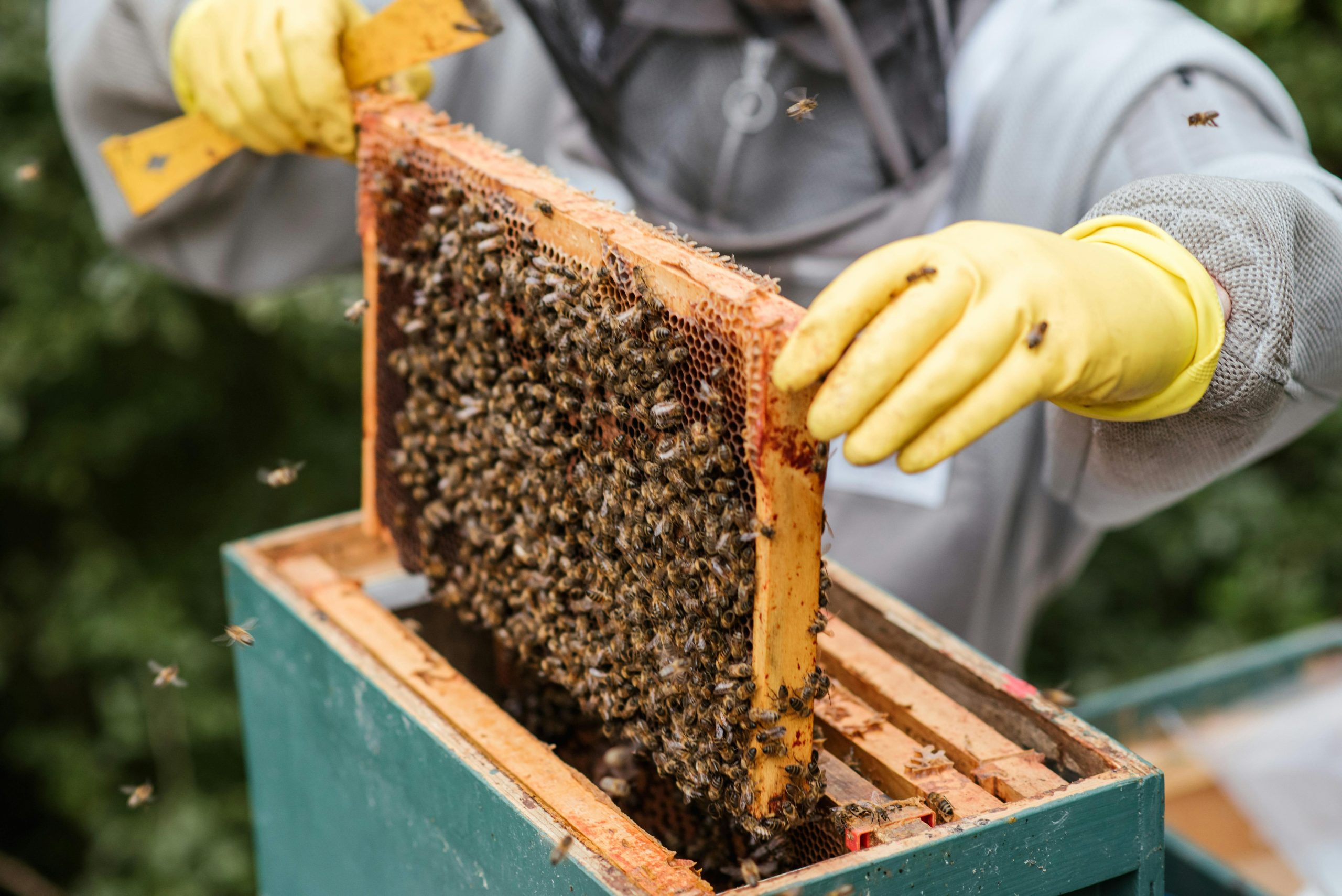
Esther Wanjiru, a Nairobi-based HR manager, set up 20 hives on her family’s 1/8-acre plot in Murang’a. Her initial investment of Ksh 140,000 covered:
- Bee hives
- Hive stands
- Protective gear
- Harvest tools and training
Within 7 months, she harvested over 280 kg of honey, earning Ksh 140,000 at a farm-gate rate of Ksh 500/kg, in year one. Her biggest buyers? Chemists, boutique hotels and retail consumers sourced via advertising on social media groups.
What New Investors Miss (But Shouldn’t)?
Many new entrants underestimate:
- Timing: Harvesting too early reduces yield and purity.
- Processing standards: Unrefined honey must be filtered and stored hygienically to attract premium buyers.
- Packaging: Retailers want barcoded, tamper-proof jars that meet KEBS standards.
Pro Tip:
Partner with certified aggregators or cooperatives to access quality processing units, KEBS compliance assistance, and entry to bulk buyer networks.
2: GLOBAL MARKETS LOVE KENYAN HONEY
If local markets are buzzing with demand, global buyers are positively swarming.
Kenyan honey has carved out a sweet spot in international markets, especially in Europe, the UAE, and the UK, thanks to its raw purity, rich acacia and eucalyptus floral notes, and chemical-free processing. Health-conscious consumers abroad are willing to pay premium prices for traceable, organic African honey, yet Kenya still contributes less than 1% to global exports. The opportunity gap is massive, and wide open.
Take the case of James, a Kenyan engineer based in Qatar. In 2022, he partnered with his brother back home in Baringo to produce raw honey using 120 hives. Today, they export to a boutique health store in Doha, earning over KES 800,000 annually, with most of the income reinvested to scale their bee colonies.
One hive yields 10–12 kg of honey per year. With export prices averaging USD 6–8/kg, even a small apiary of 100 hives can generate over KES 750,000 annually, with minimal labor and no need for constant irrigation.
Kenyan honey is the champagne of the African hive, rare, golden, and always in demand. Investors who tap into this export niche early stand to harvest not just honey, but high returns.
3: REQUIRES MINIMAL LAND AND LOW WATER
Now that we’ve seen how Kenyan honey is gaining global prestige, it’s time to bust a common myth: that successful farming needs vast acres and heavy irrigation. Beekeeping flips that script.
Think of it this way, while traditional farming guzzles water and demands space, bees work smart, not hard. A typical apiary with just 10–20 hives fits snugly on 1/8 of an acre.
No irrigation, weeding or fertilizer. Bees forage freely, drawing nectar from surrounding trees, shrubs, and flowering crops, even in semi-arid zones. They convert biodiversity into liquid gold, without competing for water or land.
Take Samuel, a retired teacher in Kitui. With 15 hives on his idle plot, he harvests over 150kg of honey annually, all without lifting a jembe. His bees pollinate nearby crops too, boosting his neighbors’ yields.
It’s like hosting a silent workforce, one that doesn’t need breaks, salaries, or supervision, yet consistently adds value.
4: HIGH RETURNS IN SHORT CYCLES
But here’s where things get exciting, honey production isn’t just low-maintenance, it’s also fast-yielding. In Kenya’s ASAL zones, farmers can harvest honey 2–3 times a year, depending on hive health and management.
For time-starved professionals, this quick turnaround is a game-changer.
It’s like owning a biological vending machine, except your stock (nectar), keeps refilling naturally with every flower bloom.
5: CLIMATE-RESILIENT, ASAL-FRIENDLY
Beyond short harvest cycles and strong returns, beekeeping proves remarkably well-suited to Kenya’s dryland zones, making it a natural fit for agripreneurs working in areas like Kitui, Kajiado, or Makueni.
Unlike crops that wither without irrigation, bees thrive in arid regions. Indigenous species such as Apis mellifera scutellata are adapted to forage across tough terrain, needing minimal human intervention. No ploughing, no daily watering, no fertilizer. Just hives, strategic placement near acacia or drought-tolerant flora, and nature does the rest.
Beekeeping is like farming with the wind, light on effort, heavy on yield, and perfectly in tune with ASAL realities.
6: BRANDING & PROCESSING CREATE VALUE ADDITION
Beyond climate suitability and water efficiency, what truly multiplies returns, especially in niche agribusiness, is how you present and process your product. Many investors overlook this silent profit lever: value addition.
By branding and processing even modest harvests, you shift from being a raw goods supplier to a premium product owner. Whether it’s packaging your honey in glass jars with a sleek label or infusing it with cinnamon and branding it as “immune-boosting,” value addition lets you tap into urban health markets and export demand.
Think of branding like the suit and tie your product wears, it commands boardroom respect and boutique prices.
CONCLUSION
Now that we’ve seen how honey branding can multiply profits and create niche value, it’s clear: beekeeping isn’t just a sideline, it’s a serious investment opportunity.
From idle plots to ASAL terrain, Kenya’s diverse landscape is buzzing with untapped potential. With just 1/8 acre and a handful of hives, you could be turning nectar into net worth within six months. Add in branding, proper hive management, and access to growing local and export markets, and your profit margins could rival more capital-intensive ventures.
But remember, success in beekeeping is not automatic. It hinges on expert setup, pest management, certification, and strategic harvesting.
Ready to turn your land, or idle capital, into a buzzing agribusiness?
📞 Contact Fincare Investments Limited today to:
Let’s make your beekeeping journey a sweet success, one hive at a time.
FREQUENTLY ASKED QUESTIONS ON BEE KEEPING
Still curious about how to get started with bee keeping farming in Kenya? Here are answers to some of the most common investor questions we receive.
- Is beekeeping profitable in Kenya today?
Yes, especially with rising demand for raw, organic honey both locally and abroad. A well-managed apiary with 50–100 hives can generate net profits of Ksh 250,000 to Ksh 500,000 annually, depending on yields, hive type, and market access. - How much capital do I need to start a beekeeping venture in Kenya?
Startup costs vary, but a small-scale operation with 10–20 bee hives can be launched with Ksh 150,000 to Ksh 400,000, covering hives, bee colonies, suits, smokers, and basic training. - What kind of land do I need for beekeeping?
Bees require less than an acre of undisturbed land. Ideal locations are in semi-arid or agricultural zones like Kajiado, Machakos, Laikipia, and Baringo, regions with flowering plants and minimal pesticide exposure. Fincare Investments Limited sells and leases out affordable, bee-friendly land in such areas. - How soon can I expect returns on investment (ROI)?
With proper management, ROI begins after 6–12 months, as hives mature and honey is harvested. Most farmers recover their initial investment within the first two years, with increasing returns as hive numbers grow. - Where can I sell my honey or hive products?
Kenyan honey is in high demand among urban retailers, bulk buyers, pharmaceutical firms, and exporters. There are also co-operatives, agri-hubs, and online platforms sourcing raw honey. - What are common challenges in beekeeping, and how can I overcome them?
Issues like colony absconding, pests (e.g., ants), theft, and poor hive placement affect beginners. These are mitigated through proper training, hive inspections, fencing, and support systems. - How does Fincare support new beekeeping investors?
We help clients acquire bee-friendly land and connect you with certified trainers. Our goal is to turn your vision into a viable, long-term agribusiness.