
INTRODUCTION
If you spend enough time around serious growers in Kenya, you start noticing a pattern. The conversation is shifting. It is less about surviving the season and more about structuring income.
Capsicum sits right in the middle of that shift.
Kenya’s horticulture sector has been quietly outperforming many traditional investments. And capsicum, especially under greenhouse production, is no longer a side crop. It is starting to look like a deliberate business decision.
When you move from open-field to greenhouse production, a few things change:
- Growing conditions stop being a daily prayer
- Production cycles become easier to predict
- Quality improves, which buyers notice
- Returns can begin to show within 8 to 12 months
So why are more serious investors leaning toward greenhouses instead of open-field capsicum farming?
- WHY GREENHOUSE CAPSICUM OFTEN OUTPERFORMS OPEN-FIELD FARMING
From Weather Gamble to Managed Output
Let’s imagine two farmers in Kajiado County.
One plants capsicum in the open field. The rains delay. Then the heat spikes mid-season. Flowers drop. Pest pressure rises. He adjusts, reacts, hopes.
The other farmer runs an 8m by 30m greenhouse with drip irrigation and basic pest management. Flowering is steady. Water use is measured. Harvesting stretches over months instead of arriving all at once.
Same crop. Different systems. Very different financial conversations at the end of the
Under proper management, a single greenhouse unit can generate anywhere from KES 700,000 to over KES 1.5 million per cycle within 4 to 6 months.
Market Demand Is Not the Problem
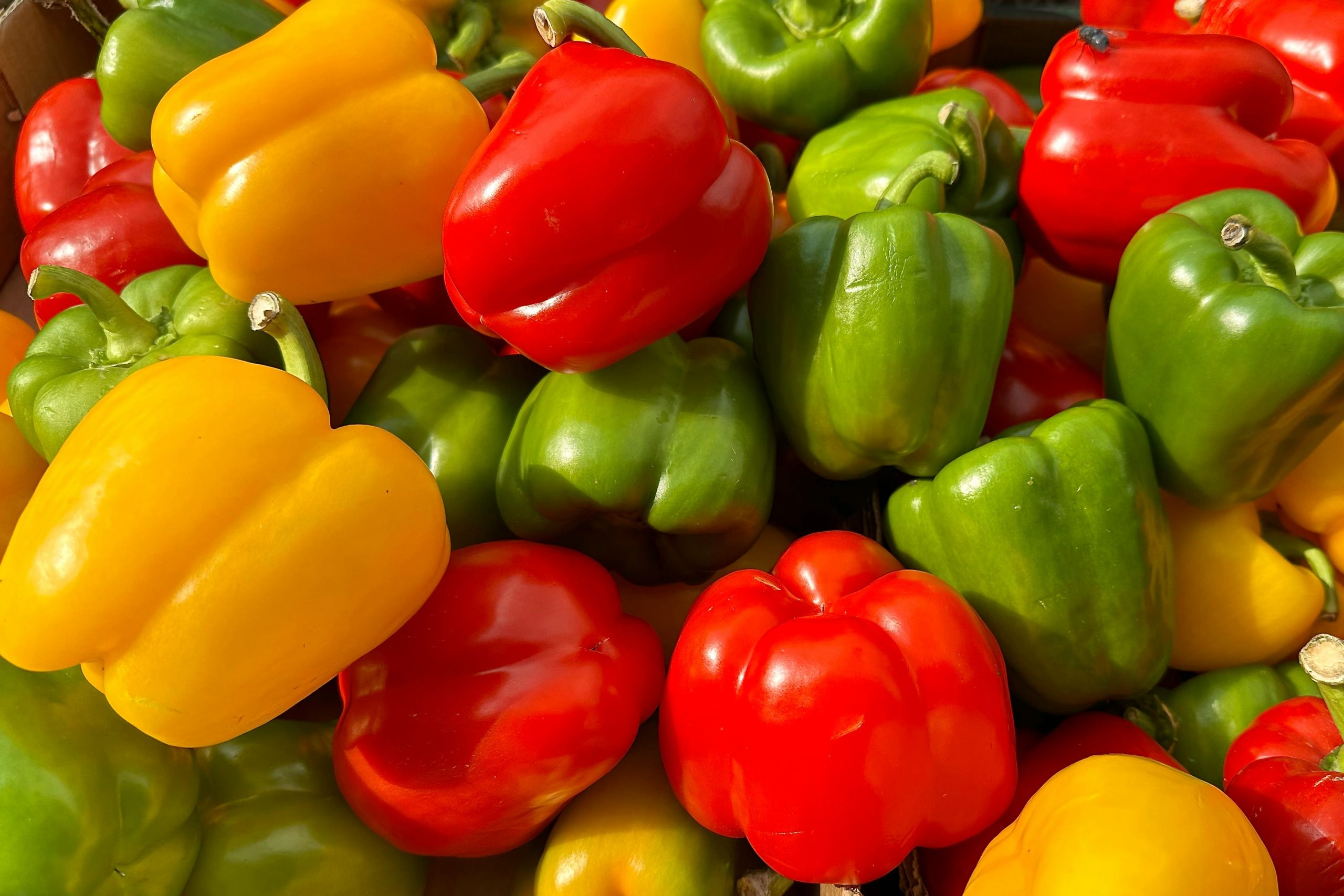
In Nairobi supermarkets, colored capsicum moves fast. Hotels and restaurants buy consistently. Urban consumers prefer red, yellow, and orange varieties. Prices in Nairobi often range between KES 220 and 350 per kg at retail, while farm gate prices usually sit between KES 120 and 250 depending on season and quality.
On the export side, markets in the United Arab Emirates, Qatar, Netherlands and the United Kingdom continue to absorb Kenyan capsicum, especially during European off-season windows.
So the issue is rarely demand.
It is consistency.
And that is where greenhouses quietly win.
The Operational Advantage
Open-field farming in semi-arid counties like Kitui County and Laikipia County comes with familiar risks:
- Irregular rainfall
- Heat stress
- Pest spikes
- Price dips during peak supply
Greenhouses soften many of those shocks:
- Drip irrigation that can reduce water use by 40 to 50 percent
- More stable humidity and temperature
- Lower disease exposure
- Predictable flowering cycles
- Off-season production windows where pricing improves
In simple terms, greenhouse systems shift farming from reacting to weather toward managing output.
Risks and Early Mistakes
Common beginner mistakes include:
- Installing a greenhouse without securing buyers
- Poor irrigation scheduling
- Wrong plant spacing
- Ignoring integrated pest management
- Assuming the first cycle will automatically be spectacular
Start with one unit. Stabilize. Track everything. Secure off-take agreements before peak harvest. Work with agronomy support. Then expand.
2. COST BREAKDOWN AND SEASONAL PROFITABILITY
For a standard 8m by 30m greenhouse:
- Structure: KES 250,000 to 350,000
- Drip irrigation system: KES 60,000 to 100,000
- Seedlings, fertilizers, crop protection, labor: KES 40,000 to 80,000
Total setup typically falls between KES 350,000 and 500,000.
Production expectations often look like this:
- 800 to 1,000 plants per unit
- 6 to 8 tons per cycle under good management
- First harvest around 75 to 90 days after transplanting
- Continuous picking for 3 to 4 months
If we take a conservative farm gate price of KES 150 per kg:
6,000 kg multiplied by 150 equals KES 900,000 in gross revenue.
At KES 200 per kg, the math shifts quickly.
Scale to four units on roughly a quarter acre and revenue can cross KES 3 million per cycle. Break-even often happens within one to two production cycles. Sometimes earlier. Sometimes later if pricing dips.
This is where discipline separates optimism from actual returns.
3. FROM GREENHOUSE TO GLOBAL MARKETS
Kenyan capsicum continues gaining traction in markets like the Germany alongside the UAE and the UK. Demand is driven by consistent quality and off-season supply.
Greenhouse production supports:
- Uniform fruit size
- Consistent color
- Lower pesticide residue
Export can command 15 to 40 percent higher pricing compared to local wholesale markets. Earnings linked to USD or EUR also cushion currency fluctuations.
You need:
- Strict grading and uniformity
- Food safety compliance such as GlobalG.A.P
- Traceability and spray records
- Reliable cold chain handling
- Predictable production cycles
4. WATER EFFICIENCY, STRONGER MARGINS
In capsicum farming, irrigation discipline determines whether projected revenue becomes real money.
Modern drip irrigation can cut water usage by 40 to 60 percent while delivering moisture directly to the root zone. Pairing drip systems with solar pumping stabilizes energy costs and reduces exposure to fuel price swings.
5. SCALING BEYOND THE FIRST GREENHOUSE
Growth works best when it is measured.
Year 1 is about learning and stabilizing. One unit. Track yield. Track costs. Understand your real numbers.
Year 2 is about multiplying what works. Expand to three or five units. Introduce colored varieties targeting premium buyers in Nairobi and export aggregators.
Year 3 becomes commercial positioning. Cold storage partnerships. Aggregation hubs. Structured contracts.
An investor in kajiado described each greenhouse like a rental asset. Once one performed consistently, scaling felt less risky and more logical.
CONCLUSION
Capsicum farming in Kenya is no longer seasonal vegetable growing in the traditional sense. Under greenhouse systems, it starts to resemble asset-backed agribusiness.
Costs are predictable. Production cycles are measurable. Demand remains steady both locally and internationally.
More importantly, performance can be tracked per cycle. Profits can be reinvested. Expansion can follow data instead of guesswork.
That is what makes greenhouse capsicum attractive. Not hype. Not excitement. Structure.
FREQUENTLY ASKED QUESTIONS
Is capsicum farming profitable in Kenya?
Yes, particularly under greenhouse production. Controlled environments support stable yields and consistent quality, which translates into stronger margins when managed professionally.
What kind of return can greenhouse capsicum generate per acre?
Returns depend on yield, pricing, and market access. Many growers begin seeing meaningful returns within the first production cycle, with profitability improving as systems stabilize and scale.
What is the minimum land required?
With greenhouse systems, as little as one-eighth of an acre can support commercial capsicum production, making it accessible even to investors with limited land.
Can someone manage capsicum farming from abroad?
Yes. Structured remote management models in areas like Isinya allow diaspora investors to receive reports, oversee operations, and access markets without being physically present.
Which regions perform best for capsicum farming in Kenya?
Regions such as Kajiado County, Limuru, and Nyandarua County are often favored due to climate conditions, accessibility, and established horticultural value chains.
What is required to export capsicum from Kenya?
Exporting requires compliance with phytosanitary standards, GlobalG.A.P certification, proper traceability systems, and reliable aggregation or export partnerships to access regional and international buyers.