
INTRODUCTION: WHY IRRIGATION SYSTEMS ARE QUIETLY CHANGING AGRIBUSINESS IN KENYA
Across Kenya today, something interesting is unfolding. Not loudly. Not with billboards or bold promises. It is happening quietly on farms where water is no longer a guessing game.
Farmers who rely on modern irrigation are pulling ahead. Slowly at first. Then noticeably. A 2024 agribusiness analysis pointed out that irrigated farms are producing four to seven times more per acre while using 30 to 60 percent less water. That number sounds dramatic, but when you see it on the ground, it feels almost obvious.
Rain has become unreliable. Dry seasons stretch longer than expected. Rains arrive late, or not at all, or all at once when you are not ready. Rain fed farming now feels like a gamble rather than a plan.
That is why counties like Kajiado, Kitui, Baringo, and Laikipia are pushing water saving systems. Not because they are trendy, but because they stabilize food supply and allow farmers to plan beyond the next rain cloud. Year round production starts to feel possible again.
TOP IRRIGATION SYSTEMS FOR KENYAN FARMS
Over the past few years, a certain type of farmer has emerged. They do not wait for weather updates. They do not plant and hope. They invest in systems that turn water into something predictable.
Think about this for a moment. A tomato farmer using drip irrigation consistently harvests between 22 and 28 tonnes per acre. Right next door, rain fed farms struggle to hit six tonnes under similar conditions. Same soil. Same market. Very different outcomes.
The drip system often pays for itself within a single season. Higher yields help, of course. But so does better fruit quality, less fertilizer loss, and fewer disease problems. All those small efficiencies add up faster than people expect.
This pattern keeps repeating itself across Kajiado, Machakos, Laikipia, and parts of Narok. The irrigation system you choose shapes water efficiency, fertilizer use, labor needs, and even how consistently you can supply the market.
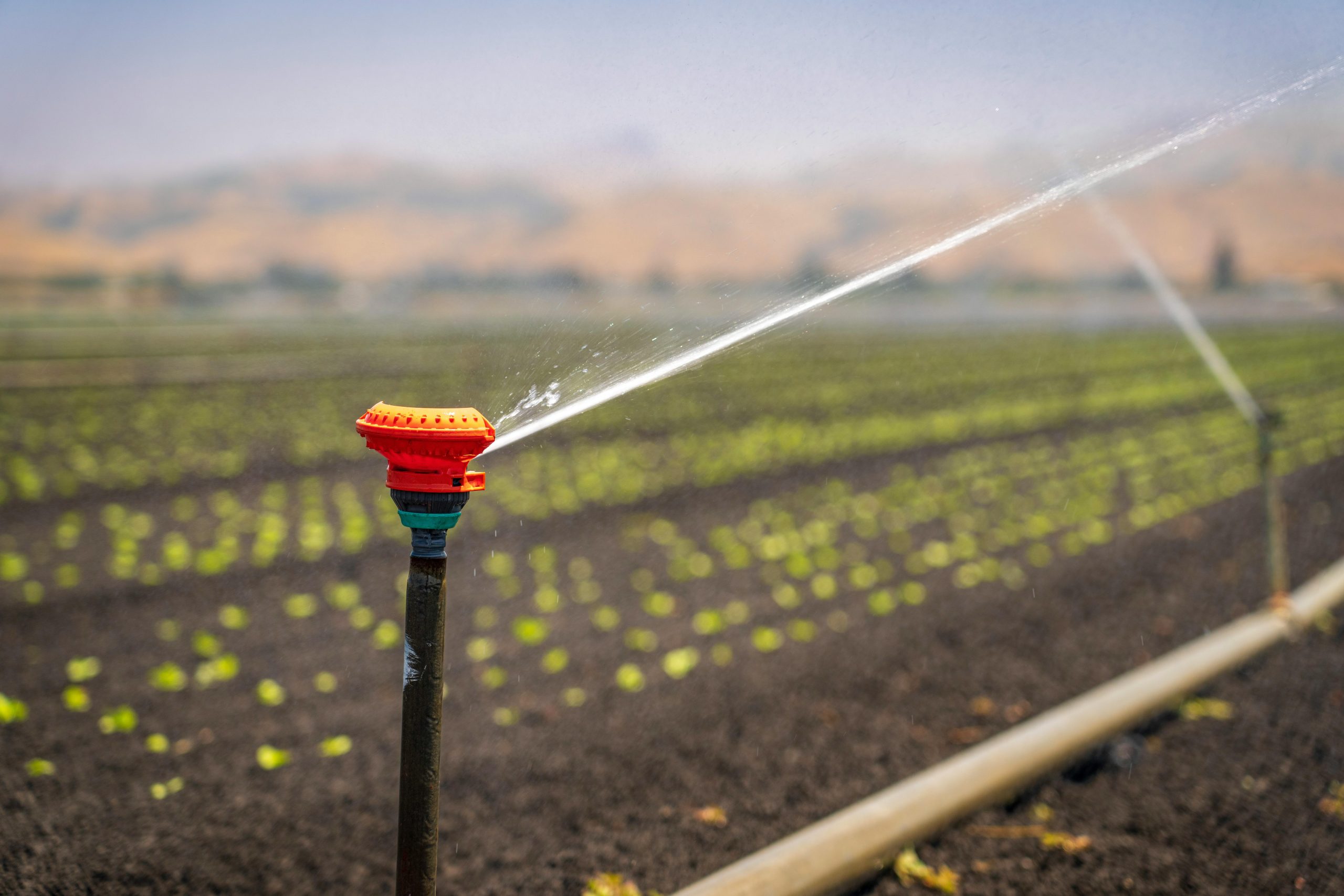
Drip irrigation feeds water straight to the root zone. Evaporation drops. Disease pressure drops too. Sprinkler systems work better where uniform coverage matters more than precision, like pasture, potatoes, or fodder. Solar powered systems are gaining ground in off grid areas where fuel costs used to eat into profits.
1. DRIP IRRIGATION SYSTEMS
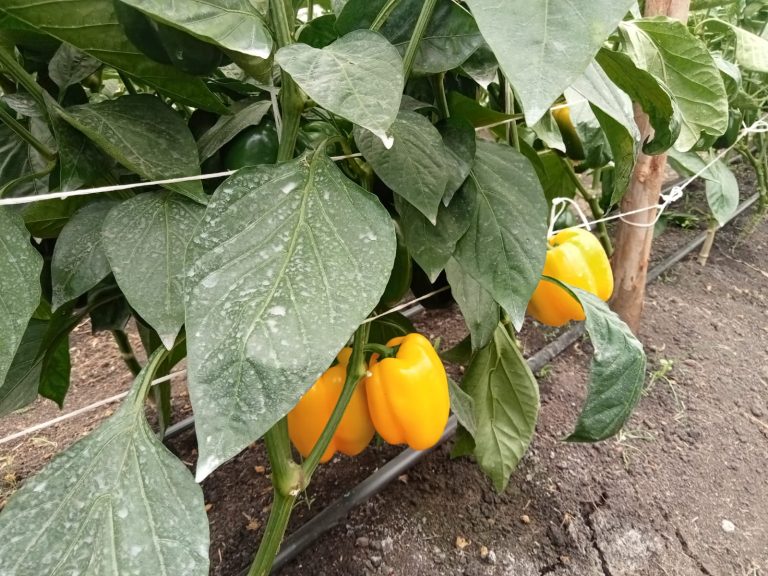
Drip systems remain the favorite for vegetables, herbs, and fruit crops. Anywhere precision matters, drip tends to win.
Installation costs range from KES 120,000 to 180,000 per acre. Yield increases of four to seven times are common when management is done well. Reduced fertilizer waste and lower labor demands help farmers recover their investment within three to five months, especially with tomatoes, capsicum, onions, and herbs.
A quarter acre drip setup costing around KES 60,000 to 85,000 can outperform a full acre of rain fed production.
Drip systems work even better with fertigation. This is simply feeding nutrients through the drip lines. Plants receive nutrients in small, steady doses. Uptake improves by roughly 30 to 40 percent. You notice it in the field. More uniform fruit size. Stronger plants. Fewer stress signs.
Weeds struggle too. Since water only reaches the crop roots, the spaces between rows stay dry. Less weeding. Less chemical use. Fewer labor headaches.
2. SPRINKLER AND MICRO SPRINKLER SYSTEMS
Sprinklers suit grains, fodder, potatoes, and pasture where even surface coverage is important. Costs range from KES 90,000 to 150,000 per acre. Under proper management, yields often double or triple. Payback usually falls between six and twelve months.
Many farmers like sprinklers when moving away from rain fed systems. They are flexible. Easy to expand. Compatible with electric or diesel pumps. That sense of familiarity helps during the transition.
Sprinklers also cool crops during hot periods. In areas where temperatures hit 30 to 35 degrees, leaf cooling can make a real difference. Spinach, lettuce, sukuma wiki, and coriander tend to hold up better under heat stress.
A small group in Isinya recently used micro sprinklers for spinach and fodder. The crops recovered faster after harvesting and handled heat better than expected.
Micro sprinklers shine in orchards. They irrigate a small circle around each tree, reducing water use while supporting early root growth. Many passion fruit, avocado, and citrus farms start with micro sprinklers and later shift to drip as trees mature.
Another advantage is flexibility. Portable sprinkler lines can be rotated to new sections as the farm expands. This suits farms that change crop cycles or scale gradually.
3. GRAVITY AND FURROW SYSTEMS
Some farmers still rely on gravity based irrigation. Water flows through shallow furrows. It feels old school but it still works for maize, beans, and sorghum on flat land with plenty of water.
Entry costs are low. You need access to water and a workable layout. The downside is water loss. On certain soils, losses can approach 40 percent.
Gravity systems remain common in schemes like Mwea, Ahero, Perkerra, and Bura. Their simplicity keeps them manageable, especially for crops that do not demand precision.
Scheduling helps. Many farmers now irrigate early in the morning or late evening to reduce evaporation. Compacting furrow walls also reduces seepage.
Some add mulch along the ridges. Soil moisture lasts longer. Roots stay cooler. Combined with drought tolerant varieties, gravity systems still deliver reasonable yields at a lower cost.
4. SOLAR PUMPS AND WATER STORAGE
Solar powered irrigation keeps spreading, especially in remote areas. Initial costs range from KES 70,000 to 350,000 depending on capacity. Solar does not automatically increase yields, but it cuts recurring energy costs by up to 60 percent.
For farms irrigating year round in ASAL regions, payback often happens within twelve months through fuel savings alone. Reliability plays a big role too. No fuel shortages. No surprise price hikes.
Pump sizing matters more than many people expect. Buying a pump that cannot handle the pressure for drip or sprinklers causes endless frustration. Proper sizing reduces maintenance, saves power, and supports long term stability.
Water storage tanks act as buffers. They balance pressure and protect drip lines from sudden surges. Raised tanks improve gravity flow and reduce pumping during irrigation hours.
COST, FINANCING AND PAYBACK TIMELINE
After pumps and storage, cost becomes the big question. A typical one acre solar drip setup ranges from KES 145,000 to 260,000 depending on pump strength and filtration. Multi acre systems can reach KES 750,000 to 3 million when fertigation units are included.
Larger projects lower the cost per acre. Financing has also improved. Many suppliers now offer asset financing or lease to own options. This suits investors who prefer manageable repayments over large upfront costs.
A farmer in Kajiado installed a solar drip system on a tomato plot and recovered the investment in three seasons. Consistent dry season production made the difference.
Water source matters too. Boreholes increase initial costs due to drilling and pump installation. Once secured, running costs drop sharply with solar systems.
CONCLUSION
At this point, the systems, costs, and returns are clearer. The real decision is how to turn all this into a farm that pays consistently.
Irrigation is not simply a technical upgrade. It is a safety net. It protects yields when weather misbehaves and gives farms room to grow.
Consistent production also changes how farmers interact with markets. Better timing. Better negotiation. Less pressure to sell during low price seasons. Over time, that stability reshapes profitability.
From solar drip for vegetables to sprinklers for orchards and nurseries, the right system becomes an anchor. For many investors, the challenge is not choosing technology. It is securing reliable land and water access.
That is where Fincare comes in. Our irrigation ready plots in Isinya and Kajiado include water setups and technical support options. You start with land that already works, so you can grow with confidence.
FREQUENTLY ASKED QUESTIONS
- What is the average irrigation system cost per acre in Kenya
A solar drip starter system costs between KES 145,000 and 260,000 depending on pump strength, filtration, and layout. - Why is drip irrigation widely preferred
It delivers water directly to the roots, reduces wastage, and boosts yields for tomatoes, onions, capsicum, herbs, berries, and more. - How long is the payback period for solar drip systems
Most investors recover costs within two to four seasons. High value crops shorten this timeline. - Can diaspora investors manage irrigation remotely
Yes. Modern pumps, sensors, and controllers support remote monitoring from Nairobi or abroad. - Are financing options available in Kenya
Yes. Asset financing, supplier credit, and lease to own models are commonly offered. - Which irrigation system suits different crops
Drip works well for vegetables, herbs, and orchards. Sprinklers suit nurseries and fodder. Large farms often combine systems. - Does Fincare offer irrigation ready land in Isinya
Yes. Fincare provides irrigation ready plots for investors seeking predictable production.