
INTRODUCTION:
There’s a pattern you start to notice after talking to a few farm investors. The farm is active. Crops are growing. Harvests are happening.
But when the question comes up, “So how much did you actually make?”… the answer gets a bit uncertain.
A lot of farms still operate like this:
- Expenses are loosely tracked or remembered
- Yields are estimated after harvest
- Sales are recorded inconsistently
The farm looks busy. But the business side feels unclear.
This is where farm record keeping comes in, not as paperwork, but as a system for control. Because if farming is going to work as a reliable income stream, it needs more than activity. It needs clarity.
1. What Is Farm Record Keeping and Why It Matters
So what does farm record keeping really look like in practice? Let’s take a simple example.
An investor sets up a one-acre strawberry farm. The farm is operational. Workers are active. Inputs are being applied. Harvests are coming in weekly. A few months in, things feel okay. There is movement. There is income.
But when it’s time to evaluate performance, things start to blur.
- How much was spent on inputs this cycle?
- Which weeks had the highest yields?
- Which buyer gave the best prices?
No clear answers.
Now compare that with a similar farm that tracks everything consistently:
- Daily expenses logged
- Harvest volumes recorded per week
- Sales captured with pricing and buyer details
The farm itself may not look very different from the outside. But internally, it operates on a completely different level.
One is guessing. The other is learning.
At its core, farm record keeping is the structured tracking of three key areas:
- Inputs – seeds, fertilizer, labour, water
- Outputs – yields, volumes, quality
- Financials – total costs, revenue, net profit
With proper records, you can:
- Identify cost leakages that may quietly reduce margins by 15 to 25 percent
- Compare crop performance across different seasons
- Adjust inputs based on actual results instead of assumptions
2. TYPES OF FARM RECORDS
Record keeping is not extra work. It is what turns farming from activity into a controlled investment. This is where many farms lose the plot. Not because the crop failed, but because no one tracked what actually made money.
Financial Records – Where profit becomes real (or not)
This is the backbone. Financials tell you what went in and what came back. It answers one uncomfortable question most farmers avoid: are you actually making money?
It is not enough to note total spending. You want clarity at a granular level.
- Daily and seasonal expenses per crop cycle
- Labor costs, both casual and permanent
- Water, transport, and post-harvest handling
- Revenue per harvest, not just per season
What starts to emerge is pattern recognition. You begin to see which cycles quietly drain cash and which ones carry the business. Gross income looks impressive. Net profit tells a different story.
Production Records – Separating perception from performance
Production records shows what the land is really giving you across cycles. . Most farmers estimate yields. Investors track them.
Production records give you:
- Planting dates vs harvest timelines
- Yield per acre or per greenhouse
- Crop performance across different seasons
Over time, trends show up. Maybe your second cycle consistently underperforms. Maybe one crop thrives in dry months but struggles during rains.
It shifts decisions from guesswork to strategy.
Input Usage Records – Where margins are won or lost
Input records quietly reveal where costs are leaking. Inputs are expensive. In many cases, they take up over half the production cost.
Tracking should go beyond “what was used”:
- Quantity applied per section or crop
- Frequency and timing
- Cost per application
This is where inefficiencies hide. A slight over-application of fertilizer or chemicals might not feel like much in the moment. But across a full cycle, it quietly eats into margins.
Sales and Market Records – Turning produce into profit
This is where timing and buyers either make you or cost you 20-40% in price swings. Growing is one thing. Selling well is another game entirely.
You want visibility on:
- Who you sell to. Brokers, direct buyers, contracts
- Price variations across markets and seasons
- Volumes sold per channel
- Timing of sales relative to market demand
The same crop can earn 30% more or less depending on when and where it is sold.
Without this data, farmers often sell under pressure. Especially with perishable produce and weak cold chain systems. With records, you start to anticipate the market instead of reacting to it.
3. HOW RECORD KEEPING DIRECTLY IMPACTS FARM PROFITABILITY
Once you know what to track, the real shift happens in how those numbers start shaping your decisions.
This is where profitability stops being a guess. In many cases, farms lose 15-30% of potential profit simply because no one is watching the details closely enough. Records change that. They expose where inputs are overused, where yields are underperforming, and where timing is costing you money.
Take a capsicum farmer adjusting fertilizer and irrigation based on past yield data. A small shift, maybe nothing dramatic at first glance. But over one cycle, margins improve by 15-20%. That is not luck. That is data doing its job.
4: MANUAL VS DIGITAL RECORD KEEPING SYSTEMS
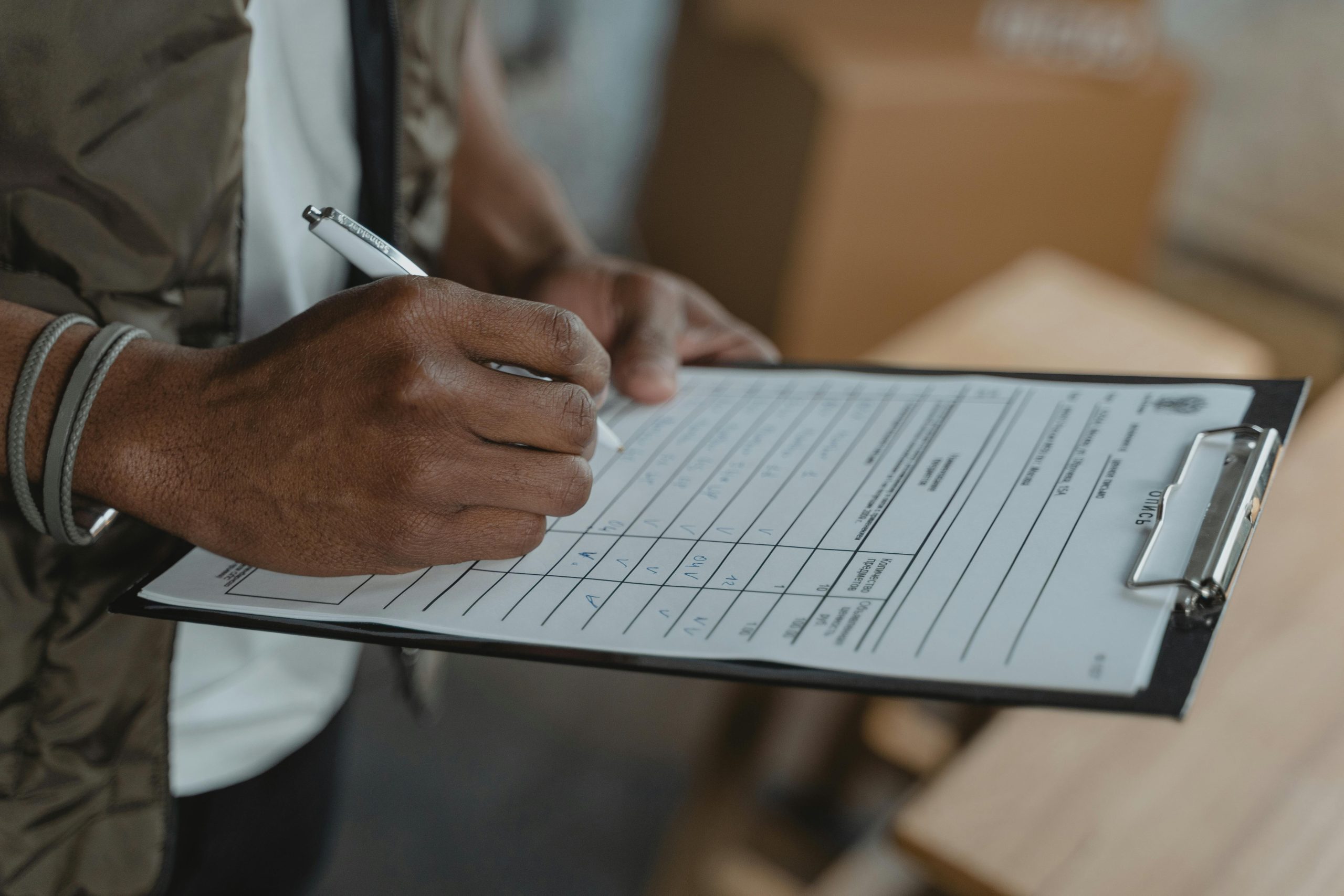
Manual systems are where most farms begin. A notebook, a few printed sheets, or a simple logbook. It works. It is low cost and familiar. But in many cases, that is also where problems start. Entries get skipped. Numbers are estimated. Pages go missing. And when you need a clear answer, it takes time… sometimes too much time.
Digital systems shift that completely. Spreadsheets, mobile apps, even shared dashboards. Suddenly, records are updated in real time. You can track expenses, yields, and sales without waiting for end-of-week summaries.
A first time farmer in Isinya relied on handwritten reports sent every two weeks. By the time issues showed up, the losses had already happened. Switching to a shared spreadsheet changed everything. Decisions became faster. More precise.
5. COMMON MISTAKES FARMERS MAKE WITHOUT PROPER RECORDS
Lack of proper records is where things start to go wrong for many farms.
Without proper records, expenses are often underestimated. On paper, things look profitable. But once you factor in labor leakages, transport, water, and input overuse, margins shrink fast. In many Kenyan farms, this alone can eat up 15–30% of expected profit.
Then comes overestimating yields. Memory can be misleading. A farmer recalls a “good season” and repeats the same strategy, not realizing yields were inconsistent across plots or cycles. Without data, poor performance gets recycled.
A diaspora investor relied on verbal updates from a farm manager. Everything sounded promising. But when detailed records were finally introduced, it became clear some crop cycles were barely breaking even. That gap between perception and reality was costing money.
There is also poor market timing. Without tracking price trends or buyer patterns, produce gets sold when it is convenient, not when it is most profitable. In volatile markets, that can mean a 20-40% price difference.
The biggest issue is this. Mistakes keep repeating. No reference point, no learning curve.
6. FARM RECORDS TO SCALE AND ACCESS FINANCING
Once your farm records are consistent, something shifts. You are no longer explaining your farm. You are showing it. Financial history, yield trends, cost structures… it all starts to tell a clear story. And that is exactly what lenders and investors look for. In Kenya today, access to agricultural financing often comes down to one thing. Proof.
Lasoi, a small-scale farmer in Isinya moved from one greenhouse to three, simply by presenting clean records that showed stable returns over two seasons. The numbers made the decision easy for the lender. No guesswork, no back-and-forth.
“When we shared our records, everything changed. Suddenly, lenders took us seriously.”
That is the shift. Records turn your farm into something banks and partners can actually understand. Almost like converting daily farm work into a financial statement.
7. SIMPLE FARM RECORD KEEPING TEMPLATES
Daily Expense Log
A daily expense log helps you track every shilling going into seeds, labor, transport, and inputs. This is where control begins. Every cost gets recorded the moment it happens.
Include:
- Date of expense
- Item or service (seeds, fertilizer, labor, transport, water)
- Amount spent
- Purpose or crop stage it relates to
- Supplier or source
Harvest Tracking Sheet
A harvest tracking sheet shows what was produced, when, and in what quantity. This shows whether your farm is truly performing or just looking busy.
Include:
- Crop type and variety
- Planting date
- Harvest date
- Quantity harvested (kg or crates)
- Quality notes (grade, rejection rate, market suitability)
- Yield per section or plot
Sales Record Template
A sales record templateconnects everything back to revenue, including buyer type and price. This connects production to actual income.
Include:
- Date of sale
- Buyer type (broker, direct buyer, contract buyer)
- Quantity sold
- Price per unit
- Total revenue
- Payment status (paid, pending)
- Sales channel (farm gate, market, aggregator)
CONCLUSION: CONTROL IS THE REAL ADVANTAGE
Farm record keeping is not a technical task but something much more powerful. It is a control system that turns farming from guesswork into a structured investment with predictable direction.
In many cases, the difference between loss and profit is not the land or even the crop. It is visibility. Records reduce risk, improve decision making, and allow investors to see exactly what is happening on the ground.
FREQUENTLY ASKED QUESTIONS (FAQS)
What is farm record keeping in Kenya for investors?
Farm record keeping is the systematic tracking of all farm expenses, production, and sales to improve decision making and profitability. It helps investors clearly see where money is made or lost, especially in remote farm setups.
Why is farm record keeping important for agribusiness investment?
It provides visibility and control over farm performance, allowing investors to track return on investment, reduce losses, and make data driven decisions. Without it, farming becomes guesswork instead of a structured investment.
Can I manage a farm remotely using records?
Yes. With proper reporting systems, diaspora investors can monitor operations from anywhere and make informed decisions in real time. It works like a dashboard that shows exactly how the farm is performing.
What records should I track for farming profitability?
Key records include expenses, yields, input usage, and sales performance. Together they reveal true profit margins and help identify inefficiencies that reduce returns.
How do farm records improve return on investment in agriculture?
They make hidden costs visible and help optimize inputs like fertilizer, water, and labor. This ensures every shilling spent contributes to measurable output and profit.
Manual vs digital farm record keeping, which is better?
Manual systems are simple but prone to errors, while digital tools offer real time tracking and scalability. Digital systems are more effective for remote farm management.
Can farm records help attract investors or financing?
Yes. Clear records act like a financial statement for your farm, building trust with lenders and partners by proving consistent performance and profitability trends.